
Originally published in January 2022 in Show Beagles Worldwide (Czech Republic)
As Beagle handlers and indeed handlers of any breed we all know that the moment we stack the dog, whether on the ground or on the table, is our first real opportunity to shape and present the dog’s structure to its best possible advantage. Through correct training and a solid understanding of balance and center of gravity, skilled handlers can significantly improve the overall picture a dog presents in the ring.
Common structural faults can often be visually minimized during stacking. Front feet that turn outward may be corrected and held temporarily; cow hocks can be aligned into straight, parallel columns; a high croup can be softened by subtly stretching the rear; and a low tail set can be disguised by intelligent tail handling. These adjustments, while temporary, can dramatically influence first impressions.
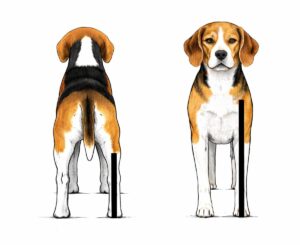
The Judge’s Perspective: Where the Truth Appears
Speaking now from my perspective as a international judge for many years, I am fully aware of these handling techniques. For that reason, examination on the table provides only preliminary information. My true assessment of a dog begins when move and “arrives” after the up-and-down.
This moment reveals the dog in its most natural state. How the neck blend with the body, tail set, topline, and overall balance tend to present themselves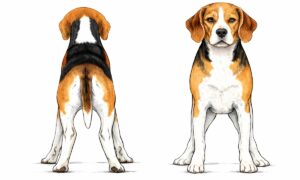 more honestly once the dog is in motion and settles naturally in front of the judge. For this reason, I pay particular attention to how the dog arrives and usually take the time to observe it from the front, side, and rear.
Unfortunately, it has become increasingly common, at least in the United States, to see judges who do not take the time to walk around the dog. Whether due to fatigue, time pressure, or simple disinterest, this reality directly affects how dogs are evaluated.
Taking Chances: The Handler’s Strategic Decisions
Now, putting the judge’s jacket aside and returning to the handler’s role, we must accept an uncomfortable truth: handling often involves taking calculated chances.
A good handler studies the dog thoroughly and understands both strengths and weaknesses, and plans accordingly. Choosing the angle from which the dog “arrives” in front of the judge is not random, it is a strategic decision.
One might ask: Does this really matter if the judge is free to move and observe the dog from any angle?
In theory, no. In practice, yes.
We often rely on the possibility that the judge may be tired, moving quickly or unwilling to take a few extra steps to examine the dog’s weaker side. If the positive impression created on the table remains fresh in the judge’s mind, the handler’s chances of success increase.
Ways to “Arrive” in Front of the Judge
Arriving Straight Toward the Judge (Front Presentation)
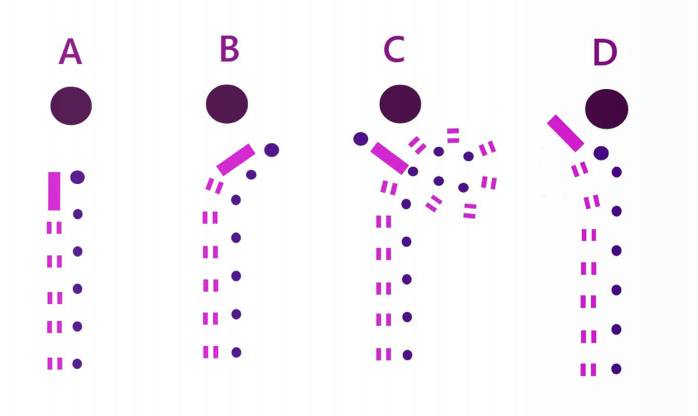
This approach is ideal for Beagles with excellent heads and strong fronts. It is particularly effective for dogs with weaker toplines, soft rears, low tail sets, or excessive length of body. Presenting the dog head-on minimizes these faults while emphasizing facial expression and forechest.(Image A)
Arriving and Setting the Dog in Profile
This technique works well for dogs whose heads are not their strongest feature, but who possess excellent proportions and a strong outline. It is also effective for dogs that naturally carry their tails high, something that, while not emphasized in the Beagle standard, can still add a compelling visual impact and a memorable “wow factor.” (Image B)
Arriving Through a Semicircle
A semicircular approach allows the dog greater freedom to self-adjust. It often helps the front legs land more evenly and permits the rear to stretch naturally into position. While the final angle resembles a profile presentation, the resulting stance is often more relaxed and authentic. (Image C)
Presenting the Dog from the Left-Hand Side
This technique frequently requires tossing bait several meters ahead to maximize expression and animation. In some countries this practice is discouraged and must be done discreetly. It is best suited for highly reactive, well-trained dogs and can produce a powerful visual impression.
This approach is especially useful when coat color or markings create optical illusions that enhance outline and balance. Although color is not important in the Beagle standard, visual perception can and often does influence judging. A white neck patch visible only from one side, for example, can give the illusion of a longer neck. If the white is on the left side, show it. Best in Show competition is often the right moment for such strategic extravagance. (Image D)
Final Thoughts: Decisions Define Successful Handling
Success in dog handling is the result of countless decisions: knowing the dog, understanding environmental conditions such as weather and surface, reading the judge, and constantly adapting strategy in real time.
Handling is not accidental. It is deliberate, analytical, and strategic.
Decisions, decisions, decisions that is what professional dog handling is all about.
Until next time, Beagle lovers.
If you enjoyed this article and would like to explore this topic in greater depth, these concepts will be expanded extensively in my upcoming book on professional dog handling.
See you in Madrid. The best is yet to come.