
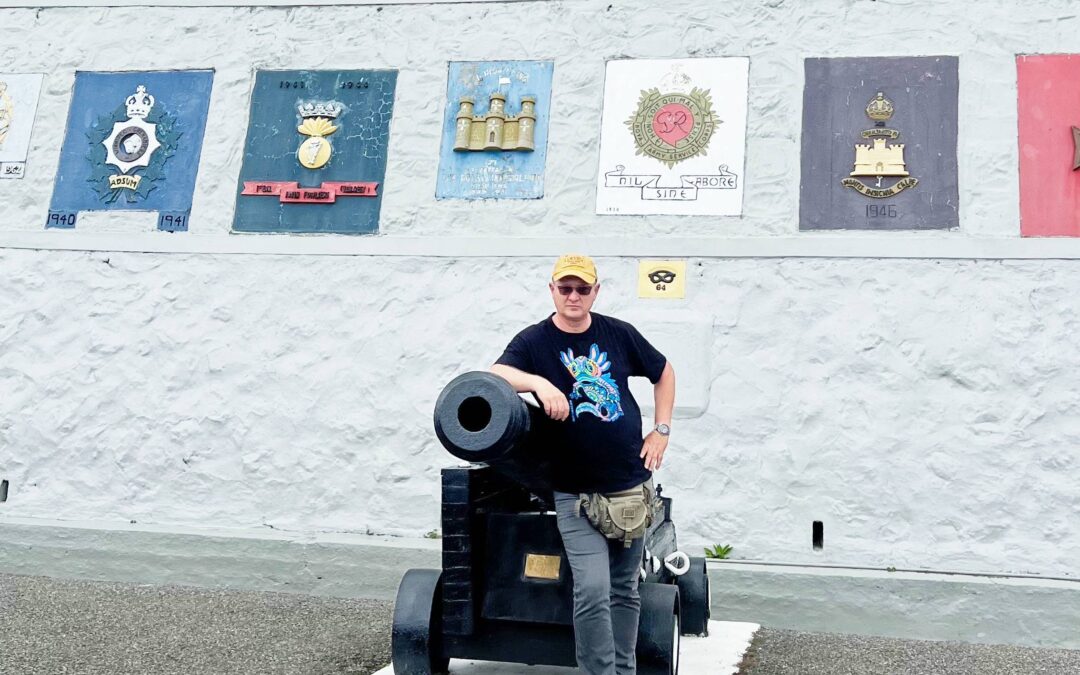
Published in May at Best in Show Magazine (USA). When you face a new situation, in this case a country, your brain automatically searches your memory to find the most similar situations. Having showed multiple times in Cuba and judging last October in the Dominican Republic, I found some things in common: all three were Caribbean islands with a strong African influence. Jamaica couldn’t be that different.
 I packed my suitcase to judge for the first time in a non-FCI member country with a superlative degree of curiosity. Listening to Bob Marley with the intention of getting acclimated, I made my connection to Miami, already knowing that 88 dogs awaited me, of only 7 breeds: 5 Dachshunds, 5 Pomeranians, 4 Welsh Corgis, 2 Labradors, 23 Rottweilers, 20 German Shepherds, and 29 Dobermans. It was obviously a small event, but my doubts began to clear up when I learned that part of the problem with the small number of breeds wasn’t only due to the economic capacity to import dogs, but also to the strict sanitary quarantine measures for bringing dogs to the island. I learned that the last Doberman import had been 15 years earlier.
The hotel where I stayed was simple but fantastic; even a shootout scene from a 1962 Agent 007 movie was filmed in its restaurant. My first day as a tourist showed me that Jamaica was a very inclusive cultural mix, one that gave the culture a very strong and defined personality. English influences mingled with those of a very bland Spanish colony, where African traits were only visible in some aspects. I found the cuisine very original and extremely seasoned. The chicken, beef, pork, and fish went hand in hand in sensational displays. The rice and beans complemented everything with some local fried vegetables and fruits cooked in a savory way. It was present, but I expected to see more plantains.
During my drive around, I saw very residential areas with ostentatious mansions on the hills bordered by less privy areas where goats and chickens roamed the streets as part of the jungle landscape. On the menu was fried lobster seasoned with habanero chili, accompanied by local beer.
My day ended with a pleasant dinner with two club members, who were kind enough to explain the complicated judging system we would be using the following day. It was obvious that with only seven breeds, Best in Show would be a small group for me, but what blew my mind was learning that the Best in Breed award didn’t exist. The best male and best female of each breed would be presented to the Group/Best in Show competition, and in addition to choosing the best, I would also have to choose the best opposite sex. I also learned that the procedure for the Dobermans would be slightly different since it was considered a specialty.
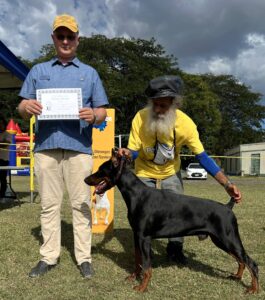 Everything was ready. I arrived at the event wearing a short-sleeved shirt and casual shoes. I’d already been told that the atmosphere would be very informal, with most of the competitors wearing shorts. At times, I felt that what really mattered were the dogs, not the protocol. My ring was so enormous that I was forced to place a chair in the center of the ring to direct the ups and downs. From my table, I could see very few crates, some on top of trucks, which had the privilege of being able to park under the shade of the surrounding trees. A few other dogs remained tied to the chain link fence without any problem despite the prevailing 85 degrees and the expected island humidity.
I began judging, and two things caught my attention: The first was that the classes were numbered progressively, meaning the first class I judged for male puppies was number one, and the next, for junior males, was number two, and so on, progressively, until the last one, which was number thirty-two. These were called over the speakers. The second was that my secretary was called by the amusing name “Marshall,” which was very endearing.
The quality of the dogs from European lines turned out to be what I expected. Breeding dogs with such a small gene pool and without access to any outside lines must be a nightmare. There was a gene in the bites of a good percentage of the Rotweilers, which was what I regretted most. The condition of the dogs was quite good, and the handlers worked hard in their own way, with a competitive attitude and very good sportsmanship. It’s really hard for me to describe the feeling I felt when I saw the lack of experience of the handlers. The truth is that everyone was trying hard, but the idea of ”I’m going to do my best to make my dog look a little better than he is” was absent. Without fear of being wrong, I can say that none of the participants had ever been outside the island to a show. There’s simply no example to follow, and that makes things difficult. Living in that bubble isolates them from knowledge, but at the same time preserves them in a pure state, without technical tendencies. It’s something I find hard to describe.
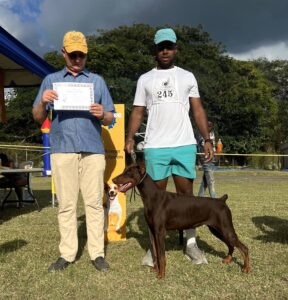 I boarded my plane back home very satisfied with my participation as a judge, enriched by the experience and thinking that sometimes we forget the diversity of the world, sometimes we forget that diversity enriches and that dog shows are much more than a beauty contest. They’re a cultural manifestation, a tribute to the breeds and to all of us who, in one way or another, try to improve them and work every day for the well-being and health of dogs. In some places, like this one, the desire to win and compete is there, but understanding with dogs seems to be the most important thing. I also thought that in the small world, life is lived with more transparency, with less malice, and without bad habits. Goodbye Jamaica. Long live the sport of purebred dogs!
The best is yet to come