
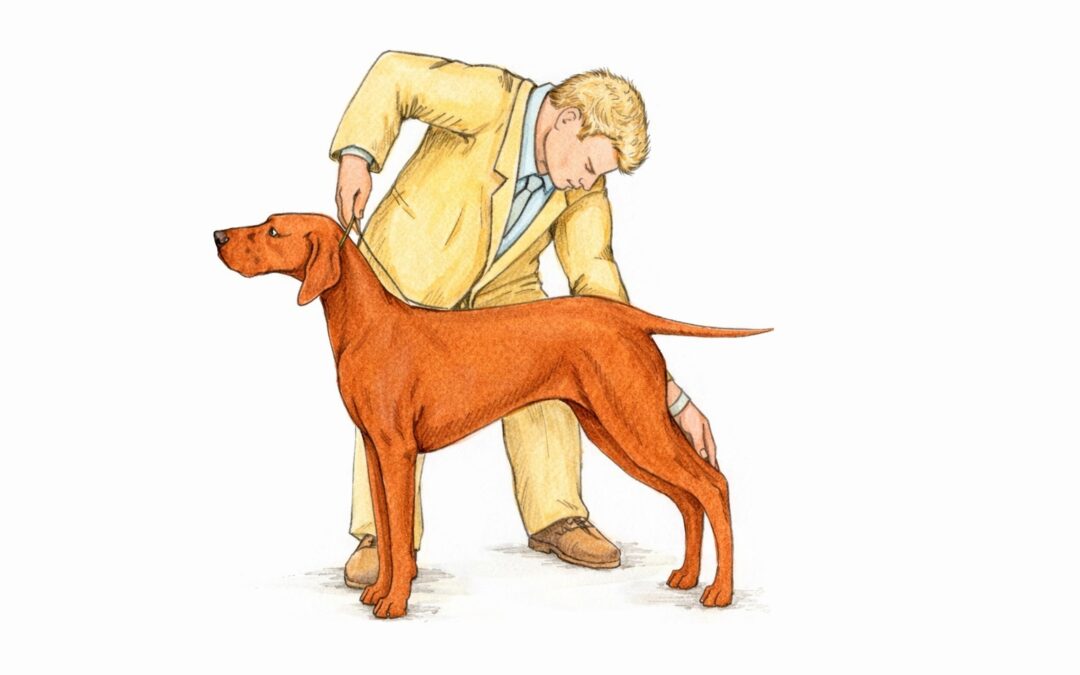
Learning how to stack a show dog correctly is one of the most decisive factors in competitive conformation. Many exhibitors still believe that the best dog always wins, but in reality, the dog that looks best at the exact moment of evaluation often takes the ribbon.
A judge has approximately two to three minutes to assess each dog. That short window means every second counts. It is the handler’s responsibility to ensure that the dog’s virtues are clearly visible at all times. Understanding your dog’s structure and proportions is the true starting point of a correct stack.
A poorly stacked dog can lose balance, outline, and overall impact even when the structure itself is excellent. On the other hand, a correct stack allows the judge to instantly perceive the dog’s strengths with clarity and confidence. Know the structure of your dog is critical.
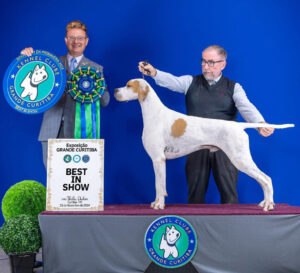
Why Stacking Matters More Than You Think
Human visual perception is limited. Judges do not “measure” structure consciously; they read outlines, angles, and proportions in a fraction of a second. A correct stack organizes the dog visually so that the eye naturally follows the intended silhouette.
When a dog is correctly stacked:
- Angulations appear cleaner
- Balance becomes obvious
- Breed type is reinforced
- Movement is anticipated before the dog even moves
This is why stacking is not cosmetic, it is functional presentation.
Structure First, Technique Second
No stacking technique works if the handler does not understand the dog standing in front of them. Every dog is different. Length of back, shoulder layback, rear angulation, neck length, and topline stability all dictate how the dog should be stacked.
Copying a generic pose from another breed, or even another dog of the same breed is one of the most common mistakes exhibitors make.
A correct stack is always:
- Breed-specific
- Individual-specific
- Judge-aware
The Biggest Mistakes Handlers Make When Stacking
Some errors appear repeatedly in the ring:
- Overstretching the rear to “create” angulation
- Squaring a dog that should be slightly off-square
- Ignoring head and expression while adjusting
- Focusing on the pose and forgetting the dog’s head and tail positing
These mistakes do not improve structure; they distort it.
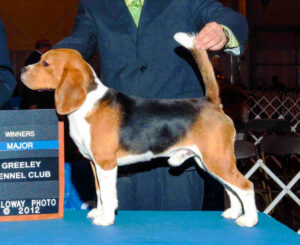
Stacking Is Static
One of the most important aspects of stacking is the keep on mind that it is a frozen position.
The best handlers are constantly making micro-adjustments:
- Correcting balance subtly
- Reading the judge’s eye
- Timing the dog’s expression
- Adjusting posture without breaking flow
The goal is not perfection it is clarity.
Training the Dog to Stack Naturally
A correct stack is not forced; it is trained.
Dogs should learn:
- To place their feet confidently
- To hold position without tension
- To stay mentally engaged
- To enjoy the interaction
When stacking becomes routine rather than pressure, the dog projects confidence and judges notice. One way to call it is muscle memory.
Final Thoughts
Stacking is the bridge between structure and perception. It does not change the dog, but it determines how the dog is understood in the ring and display his virtues.
A well-stacked dog communicates balance, soundness, and breed type instantly. That clarity is often what separates the winners from the rest.
This topic and many others related to professional handling, structure analysis, and ring strategy—are explored in far greater depth in my upcoming book, based on more than three decades of real-world experience as both a handler and a judge.
The best is yet to come.