
Introduction
The use of bait in dog shows is one of the most debated topics in the world of handling. While some consider it essential, others believe it should never be used.
After years of show and judging dogs across different countries, I can say this with certainty: bait is not the foundation of good handling, it is the finishing touch. It is the final detail that can elevate a presentation, but only when everything else is already in place.
What Is Bait in Dog Shows?
The term bait literally means “lure” but in the context of dog shows, it refers to a tool used to capture and direct a dog’s attention using food or other stimuli.
Its purpose is not feeding the dog, but channeling its energy and focus to achieve the best possible expression and show the dog virtues and angulations.
The Most Commons Mistakes
One of the most frequent errors, especially among novice handlers, is trying to showcase bait skills while the dog is poorly stacked, has misplaced feet, or lacks structural balance.
Structure and positioning must always come first. Bait comes last. If your dogs don’t bait at all, change the strategy or go a hand staking can be a good idea.
Other common mistake is ofer bait at the dog when is moving, doing that is very probably that won let the dog move in the proper way.
Characteristics of Effective Bait
An ideal bait should meet the following criteria:
- Proper size (fits comfortably in the hand)
- Highly aromatic
- Dry (to avoid staining clothing)
- Easy to break into small pieces
- Quickly accessible (preferably in the right pocket)
Does Bait Replace Training?
Absolutely not.
Show dog training should not be based on food, but on the connection and relationship between dog and handler. Bait is an attractor, a refinement tool, and an enhancer of structure and expression, but never the foundation of the training system.
Main Functions of Bait in the Ring
Enhancing Expression and “Wow Factor”
Bait helps activate ear set, intensify eye expression, and increase alertness. This creates what can be defined as the “wow factor,” a subtle but powerful visual impact that captures the judge’s attention.
This principle applies to all breeds, not only those with erect or cropped ears.
Shaping Visual Structure
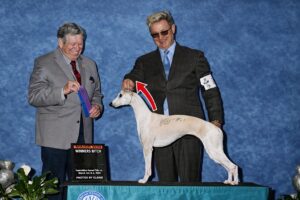
Bait can also improve structural presentation. In breeds such as the Whippet, it enhances the natural neck arch and allows proper head positioning without manual interference.
Essential Tool in Free Bait Breeds
In breeds such as the Pomeranian or Cavalier King Charles Spaniel, dogs are not manually stacked. In these cases, bait becomes essential to control posture, direct attention, and replace physical manipulation.
Critical Mistake: Overfeeding in the Ring
Constantly feeding bait leads to loss of interest, stimulus saturation, and poor response at key moments.
Bait should be used sparingly and strategically.
The Key Concept: Level of Attention to Bait
Not all dogs respond the same way. They can be classified into three categories:
High Attention
These dogs respond immediately, regardless of the type of bait used. They allow for distance handling and greater showmanship, making them ideal for maximizing visual impact.
Medium Attention
These dogs require bait to be closer to the nose and often need support from voice and lead.
Low Attention
These dogs are more difficult to engage and require stronger stimulation. In some cases, it may be necessary to throw bait on the ground to capture attention.
For these dogs, bait size is critical and presenting them slightly hungry can improve responsiveness.
Factors That Influence Attention
Attention levels can change rapidly due to internal factors such as fatigue or hunger, and external factors such as noise, distractions, or the presence of females in season.
A skilled handler must adapt immediately to these changes.
Bait Height
The height at which the bait is presented is critical. If it is too high, it can disrupt the topline and create an incorrect image of how the neck blend with the neck. The correct height enhances balance and overall appearance.
Recording and analyzing the dog from different angles is highly recommended.
When to Use Bait
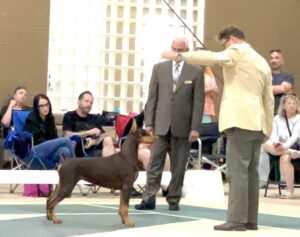
Bait is primarily used when the dog is stacked on the line or when approaching or arriving the judge, typically after the down and back.
Throwing Bait
Throwing bait can be effective, but it must be used with restraint. It should be picked up immediately, and handlers must be aware that some judges strongly dislike this practice.
Special Considerations by Breed
In breeds prone to drooling, such as the Basset Hound or Mastiff, bait increases salivation. It is essential to carry a towel and clean the mouth before the judge’s examination.
Alternatives to Bait
Some dogs respond better to squeaky toys or tennis balls. It is important to test different options and use the one that produces the best response.
How to Train Bait Usage
The process begins by manually stacking the dog, then introducing bait through scent or a very small taste. The handler moves in front of the dog and corrects immediately if the position is broken.
Training sessions should be short first, gradually increasing in duration and distance as the dog improves.
Important Reality
Not all dogs will respond well to bait. In such cases, it is essential to adjust the presentation strategy rather than forcing the technique.
Conclusion
Bait is not the most important thing in the ring, but it sure help to create the magic illusion that you are controlling your dog with a touching it and it is not a substitute for proper training.
When used correctly, it enhances expression, improves presentation, and increases visual impact. When misused, it can ruin structure, saturate the dog, and reduce effectiveness in the ring.